

Evangelion 3D Shadow Box Art vs. Posters: Which Fits Your Space?
Anime wall decor is often treated as a choice between a large framed print and an empty wall. That leaves out a useful middle ground: layered shadow box art. It delivers more physical presence than a flat poster while using less space than a statue, model display, or deep cabinet.
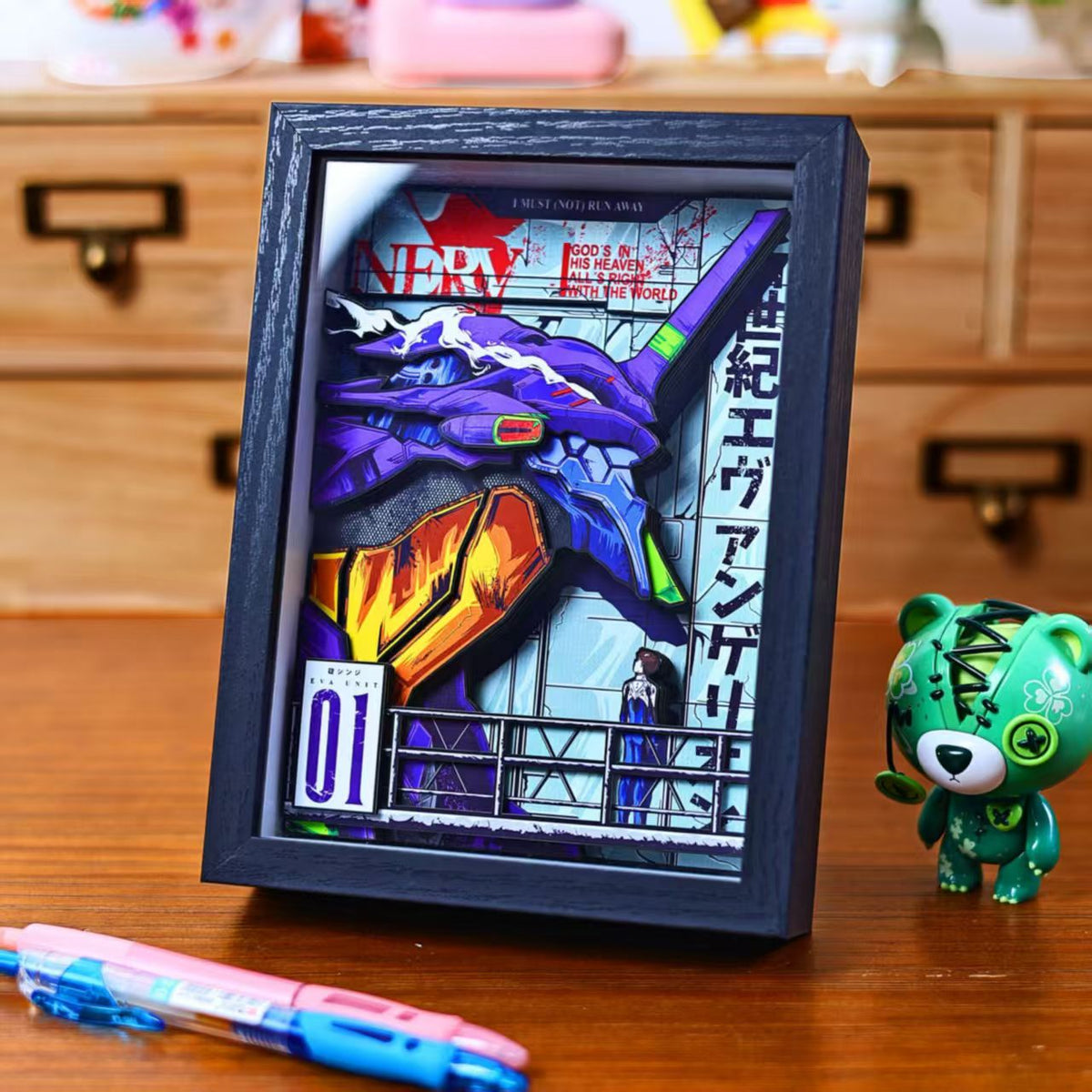
Evangelion is particularly suited to the format. Its visual language depends on scale, mechanical silhouettes, warning graphics, saturated color, and the tension between human figures and enormous machines. Separating those elements into physical layers can make familiar artwork feel closer to a small set or diorama than a printed image.
The right choice still depends on the room. A poster is affordable, lightweight, and capable of covering a large wall. A shadow box is smaller, more dimensional, and sensitive to viewing angle and light. Neither is automatically better. They create different experiences.
What Is Layered 3D Shadow Box Art?
A shadow box builds an image from multiple visual planes inside a frame. Foreground shapes sit closer to the front panel, background elements sit farther away, and the space between them produces real depth. This differs from artwork that only simulates depth through shading or perspective on one flat surface.
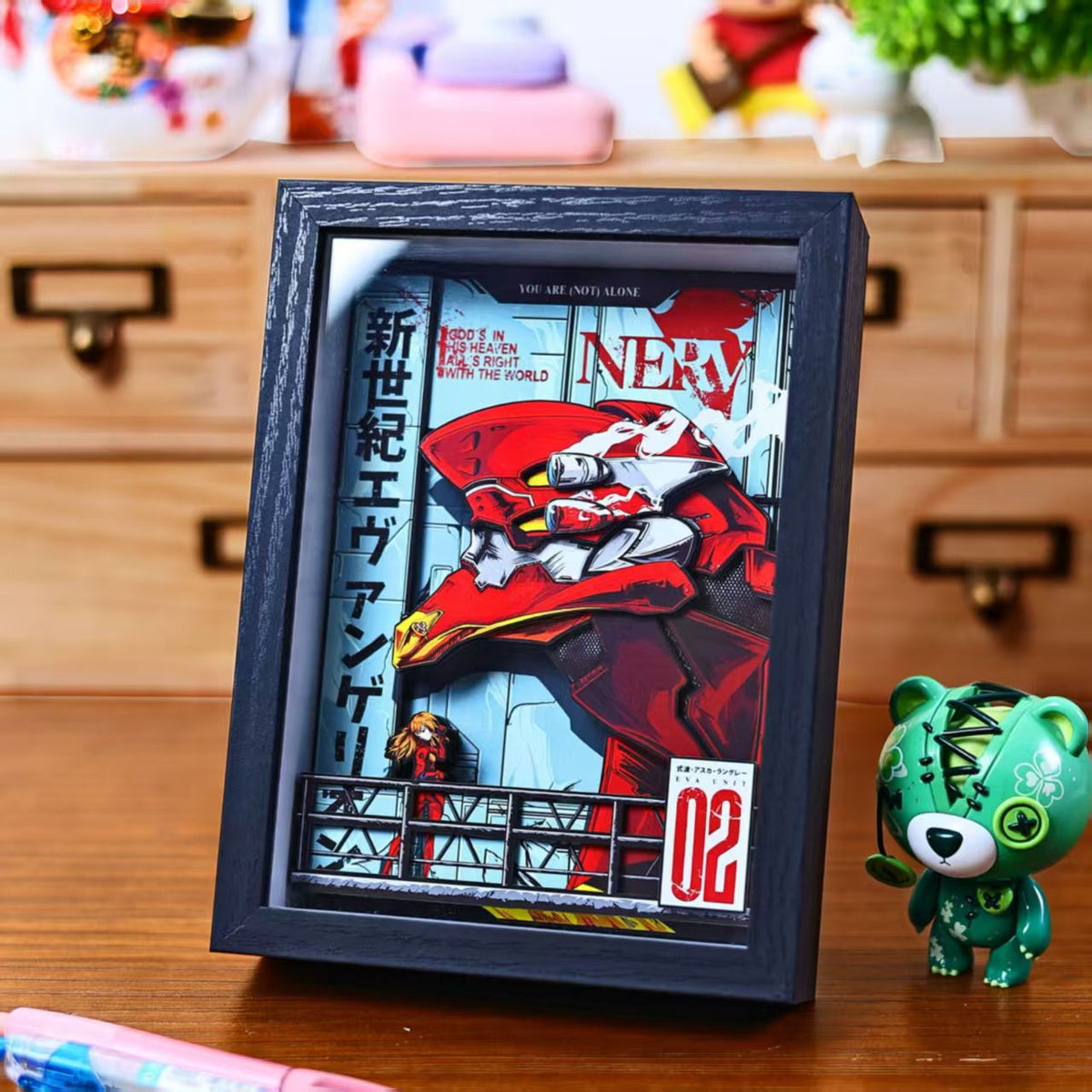
The Evangelion Layered 3D Shadow Box Art uses a high-definition acrylic front panel and more than eight visual layers. Four artwork options are shown: EVA Unit-00, Unit-01, Unit-02, and a pilot ensemble scene. The framed piece is intended for a desk, shelf, or wall arrangement, depending on the included mounting format.
Because the layers are physically separated, the composition changes subtly as you move. Edges overlap differently, reflections shift across the acrylic, and shadows between layers become more visible. That interaction is the main reason to choose a shadow box over a standard print.
Shadow Box vs. Flat Poster
A poster wins on scale. It can fill a large wall, establish a room's color palette, and remain easy to replace. Posters are also simple to coordinate as a series because frames and sizes can be standardized.
A shadow box wins on depth and focus. It occupies less visual territory but asks the viewer to approach it. The frame and acrylic front make it feel like a finished object rather than an image waiting to be mounted. It can stand alone on a shelf or become the dimensional center of a gallery wall.
| Consideration | Flat Poster or Print | Layered Shadow Box |
|---|---|---|
| Visual scale | Better for covering a large wall | Better as a focused accent |
| Depth | Simulated through printed artwork | Created by separated physical layers |
| Viewing angle | Mostly consistent from the front | Changes as the viewer moves |
| Placement | Primarily wall-based | Desk, shelf, or wall, subject to mounting format |
| Lighting | Even front light works well | Side and top light reveal layers |
| Care | Protect paper and frame glazing | Protect acrylic, frame, and layered interior |
Choose a poster when the room needs a broad backdrop. Choose a shadow box when the room already has a foundation and needs one object with detail, depth, and collector presence.
Choosing an Evangelion Artwork
The four options can support different color stories. Unit-01 is the most immediately recognizable choice for a setup built around purple, green, black, and high-contrast lighting. It can act as the central accent in a gaming space without requiring every accessory to match.
Unit-02 introduces warmer red and orange energy. It pairs well with dark wood, black shelving, red keyboard accents, or a controlled warm light. Because red attracts attention quickly, a Unit-02 piece often works best with more neutral objects around it.
Unit-00 suits cooler or more restrained displays. Blue, white, gray, and industrial materials can support the composition without making the area feel overly saturated. A pilot ensemble scene is the strongest option when the human cast matters as much as the EVA units or when the display is meant to reference the broader series rather than one machine.
For gifts, artwork preference matters more than room matching. Look for the recipient's favorite unit, pilot, color palette, or existing collectibles. A specific choice communicates attention. If you cannot confirm a favorite, consider which option fits the colors already visible in their room.
Using a Shadow Box on a Desk
Desk placement makes the changing layers easy to appreciate because the viewer naturally approaches from different angles. Place the frame beyond the active work zone, where it will not compete with the mouse, keyboard, drawing tablet, or charging cables.
A monitor corner is often effective. The shadow box can sit just outside the screen edge and visually connect with a keyboard accent or desk mat. Keep enough distance from the monitor so neither frame blocks the other. If the desk has a riser, test whether the artwork feels better on top as a focal object or below as part of a low display.
Avoid placing it directly beside a bright window. Strong daylight can create glare on the acrylic and expose the artwork to prolonged sun. A position perpendicular to the window usually gives better visibility.
Styling a Shelf Display
On a shelf, treat the shadow box as the anchor. Place it slightly off-center, then balance it with objects of different heights. A small figure can sit in front of one lower corner, provided it does not cover the main artwork. A manga volume or art book can add height on the opposite side.
Lighting for Depth Without Glare
Layered art benefits from directional light, but acrylic reflects bright sources. The goal is to create soft highlights and interior shadows without turning the front panel into a mirror.
Start with a lamp above and slightly to one side. Move it gradually until the layers become clear from the normal viewing position. Diffused neutral-white light preserves the artwork colors. Warm light can create a more atmospheric display, but it may shift cool blues and purples.
Avoid aiming exposed LED points directly at the acrylic. A diffuser, wall bounce, or shaded lamp produces a smoother result. For a gaming setup, keep RGB lighting slow and restrained. One static color drawn from the chosen EVA unit often supports the art better than a fast rainbow animation.
A Gift Between a Print and a Figure
Shopping for an Evangelion fan can be difficult because large figures require budget and display space, while posters can feel impersonal if the recipient already owns several. A shadow box sits between those categories. It has the finished presence of a collectible object but remains compact enough for a desk or shelf.
It also gives the recipient placement options. Someone in a rented space may prefer a shelf display, while someone building a dedicated room may integrate it into a wall arrangement. Confirm the selected artwork and included mounting method, then let the recipient decide how permanent the placement should be.
The best gift choice is the scene that connects to their preferences. The fact that the art has more than eight layers is interesting, but emotional recognition comes first. Technical construction supports the experience; it does not replace it.
Care for the Acrylic and Frame
Keep the shadow box away from moisture, high humidity, excessive heat, and prolonged direct sunlight. These conditions can affect the frame, printed layers, and overall appearance over time.
Dust the acrylic with a clean microfiber cloth. If necessary, use a slightly damp cloth and then dry it gently. Do not use abrasive pads or chemical cleaners. They can scratch or cloud the front panel. Support the frame securely while cleaning rather than pressing against the center of the acrylic.
When moving the piece, hold the frame with both hands. Do not lift it by any decorative interior element or mounting attachment. Review the Product Care Guide for general collectible care.
Choose the Format That Solves the Room
A poster and a shadow box do not compete on the same terms. A poster provides scale and broad visual impact. Layered shadow box art provides depth, changing perspective, and the feeling of a finished collectible. The better choice is the one that fills the actual gap in the room.
If the wall feels empty, begin with a large print. If the desk or shelf feels flat, a dimensional Evangelion scene may add exactly what is missing. Choose an artwork connected to a favorite unit or pilot, light it from an angle, and leave enough space around it for the layers to do their work.
FAQ
How many layers are in the Evangelion shadow box?
The product description states that the artwork uses more than eight visual layers to create dimensional depth.
Which artwork options are available?
The listed options are EVA Unit-00, Unit-01, Unit-02, and a pilot ensemble scene.
Can the shadow box be displayed on a wall?
The product is described for desk, shelf, or wall arrangements, subject to the included mounting format. Check the actual hardware before mounting.
Is a shadow box better than a poster?
It depends on the space. Posters are better for large wall coverage, while shadow boxes provide physical depth and work well as focused desk, shelf, or gallery-wall accents.
How should I light layered artwork?
Use soft directional light from above or one side. Avoid exposed bright LEDs aimed directly at the acrylic, which can create distracting glare.
How do I clean the acrylic front panel?
Use a soft dry or slightly damp microfiber cloth. Avoid abrasive materials, chemical cleaners, excessive heat, moisture, and prolonged direct sunlight.